EMRA Antibiotic Guide
- 2.4
- Rating
- 10.00K
- Installs
- Free
- Price
 Analysis by App-foxy
I found EMRA Antibiotic Guide most useful as a quick clinical reference rather than as a general medical education app. It is a free medical app from the Emergency Medicine Residents' Association, built around antibiotic recommendations that can be checked during a shift. That focus matters: the app is aimed at people who already understand clinical context and need a compact reference, not at someone looking for a beginner-friendly explanation of infections.
My overall impression is mixed but practical. The idea is strong, especially for emergency medicine learners and clinicians who want a guide nearby without carrying a printed reference. At the same time, the modest 2.4 average rating from roughly 133 ratings suggests that the experience has not worked equally well for everyone. I would treat it as a supporting tool, not as a replacement for local protocols, senior advice, microbiology input, or patient-specific prescribing judgment.
How the guide fits into real antibiotic decisions
The app’s central promise is simple: make antibiotic recommendations easier to reach while you are working. In a busy emergency department, that can be more useful than a large reference library that takes several screens to search. I see the strongest use case as a clinician who has already identified the likely syndrome and wants to review an appropriate antibiotic pathway before discussing the plan or entering an order.
You May Also Like

 Pandora - Music & Podcasts
Pandora’s Music Is Easy to Start, but Harder to Recover
Pandora’s strength is its low-effort path from a seed to a station. Its weak spot is how much confidence it asks you to place in connection, setup, and quiet recovery.

 8 Ball Pool
 Is Built on Rivalries, Rematches, and Routine
A close look at the rivalries, rematches, shared routines, and unanswered safety questions that turn a quick pool match into a persistent mobile community.

 Samsung Music
’s Quiet Strength Is Playing What You Already Own
Its reach comes less from spectacle than from dependable access to a personal library. That simplicity is both the app’s strongest retention engine and its ceiling.

 AccuWeather: Weather Radar
AccuWeather Review: A Quick, Clear Forecast for Everyday Decisions
For everyday plans, the best forecast is the one you can understand quickly. AccuWeather makes rain timing, radar, and local conditions easy to act on, with a few trade-offs.

 Hill Climb Racing
Why Hill Climb Racing Still Turns Crashes Into One More Run
A tiny car, a bumpy hill and one more upgrade: Hill Climb Racing keeps resurfacing because its simple chaos makes every near-miss feel personal.

 AliExpress - Shopping App
AliExpress Makes Global Shopping Feel Personal, but Shoppers Bear the Risk
AliExpress turns a global marketplace into a pocket-sized discovery engine. Its reach is useful, its shopping loop compelling, and its trade-offs easy to miss.
More From Our News Desk
View All News


That distinction is important. A recommendation guide can help organize thinking, but it does not examine the patient, interpret the full history, review every medication, or account for local resistance patterns on its own. I would use it after gathering the relevant clinical information, not before. The safest workflow is to use the app to support a decision, then check allergies, renal function, pregnancy considerations, interactions, previous cultures, and institutional guidance separately.
The Emergency Medicine Residents' Association is a particularly logical developer for this kind of resource. The app feels directed toward the pace and practical needs of emergency medicine rather than toward a broad consumer audience. Its content rating is Everyone, but that should not be confused with clinical simplicity. The audience may be unrestricted from an app-store age perspective while the actual material remains much more appropriate for trained users and students working under supervision.
What I would do before opening it
I would not begin by browsing every section. A faster approach is to define the clinical problem first: the suspected source, how sick the patient appears, whether outpatient treatment is realistic, and whether there are allergy or resistance concerns. Then I would use the guide to compare the relevant recommendation with the plan already forming in my head.
This creates a useful safeguard against a common mistake with quick-reference tools: searching until a convenient answer appears. When the app is used to confirm a clearly framed question, it can reduce hesitation. When it is used without a working diagnosis, it may encourage false confidence because a concise recommendation can look more definitive than the underlying situation really is.
A second practical habit is to keep the app in a supporting role during handover. If I used it to shape an antibiotic plan, I would still explain the reasoning in ordinary clinical language: suspected source, severity, allergy status, and why the selected option fits. That makes the decision easier for the next clinician to review and prevents the phone screen from becoming the only record of the thought process.
Cost, access, and what “free” means here
The app is free to download, which makes trying it low risk. That is the clearest part of its value proposition: a learner or clinician can assess whether the reference fits their workflow without paying an entry fee. It has passed the ten-thousand-install mark, so it is not an obscure experiment, although its audience remains specialized.
There are also in-app purchases priced at $9.99 per item. Because the available pricing information does not identify which specific material each purchase unlocks, I would not assume that every useful section is included at no cost. Before paying, I would inspect the purchase screen carefully and decide whether the additional content solves a real problem in my day-to-day work. The free access is enough to justify testing the app; the paid value depends on what the individual item contains and how often I would use it.
That distinction keeps the buying decision honest. Someone who only needs occasional antibiotic reminders may find the free portion sufficient, while a resident who uses the guide repeatedly could consider a paid item if it meaningfully improves coverage or convenience. I would avoid paying simply because the app is medical or because a purchase appears to promise completeness. A paid reference still needs to fit local practice and offer information I cannot obtain more reliably elsewhere.
The app was released on September 22, 2018, and its current version is 1.0.1.30. Those details make me cautious about expecting the polish of a recently redesigned clinical platform. Its minimum operating system is Android 5.1, which gives it broad compatibility with older Android devices. That is useful in a hospital setting where staff may use an older spare phone, but compatibility alone does not tell me how current the clinical content is. For antibiotics, content maintenance matters as much as technical access.
Where it can save time
The most valuable feature is not necessarily any individual recommendation; it is the reduction in friction between recognizing a common emergency presentation and checking a reasonable treatment direction. A compact guide can be faster than searching a general web browser, especially when the alternative is sorting through patient-facing articles, commercial pages, or long academic documents.
I can imagine using it during a busy evening when a patient’s presentation is familiar but the antibiotic choice is not automatic. Instead of relying on memory alone, I would identify the likely syndrome, consult the relevant entry, and then verify the patient-specific details elsewhere. That workflow makes the app a useful second look without pretending that a short guide can replace clinical assessment.
It may also help with teaching. A supervising clinician could ask a resident to look up the relevant recommendation, then discuss why it applies or does not apply to the patient in front of them. This turns the app into a starting point for reasoning rather than a shortcut around reasoning. For students, that is a much safer learning pattern than copying an answer without understanding the diagnosis or the consequences of unnecessary broad-spectrum treatment.
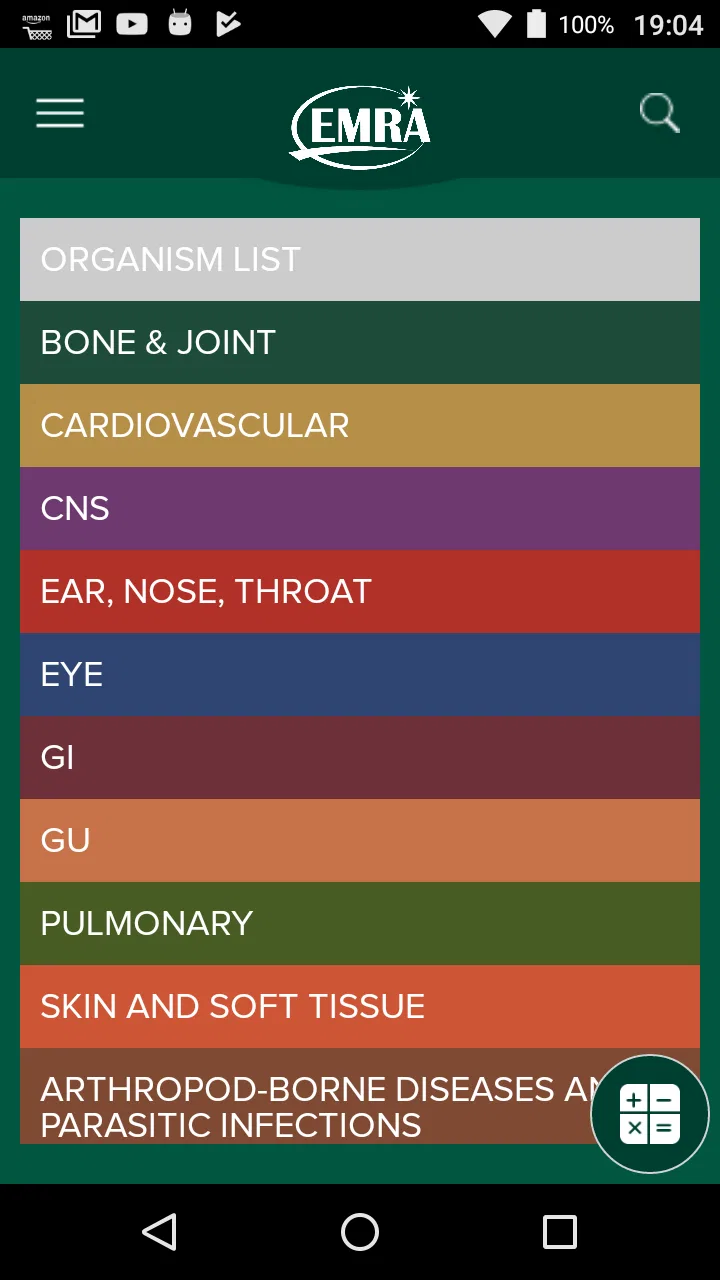
Another less obvious use is preparation before a shift. I would review the layout and identify where common syndromes appear before needing the app urgently. Learning the organization in a quiet moment is more efficient than trying to discover the navigation while managing a queue of patients. It also lets me notice whether the terminology matches the language used by my department.
Where the quick-reference format falls short
The same compactness that makes the app attractive can become a limitation. Antibiotic decisions often depend on details that do not fit neatly into a single recommendation: recent antibiotic exposure, immune status, source-control issues, local antibiograms, prior resistant organisms, organ function, and the difference between a stable outpatient and a patient who needs admission. A guide can point toward an option, but it cannot safely settle all of those questions for me.
I would be especially careful with severe infection, unusual pathogens, complex allergies, and patients with significant comorbidities. In those situations, a local hospital guideline or specialist consultation may be better than a general emergency reference. Local protocols can reflect resistance patterns and formulary realities that a broadly intended guide may not mirror. If the app and institutional guidance disagree, I would not treat the app as the automatic winner.
The rating also affects my expectations. An average of 2.4 is not a reason to dismiss the content outright, but it is a warning to test the actual experience on my device before depending on it during a shift. I would pay attention to search speed, navigation, readability, and whether the relevant information is easy to find under pressure. A clinically sensible reference loses much of its value if reaching the answer takes too long or if the interface interrupts the workflow.
The age of the release and the current version reinforce that caution. I would not assume that a familiar-looking recommendation is automatically current simply because it appears in a medical app. Before relying on it for repeated prescribing decisions, I would compare its guidance with current departmental policies and trusted institutional references. This is not a criticism unique to this app; it is a basic rule for any antibiotic tool.
Who is most likely to benefit
For emergency medicine residents, the app is the most natural fit. It can serve as a pocket reference during training, particularly when a resident knows the broad diagnosis but wants to check the recommended direction before presenting the case. Its focused scope should feel more manageable than a large drug database, and the free entry point makes it easy to evaluate without committing money.
Medical students on emergency rotations may also find it useful, provided they use it with supervision. I would recommend it as a way to prepare questions and understand the structure of common antibiotic decisions, not as permission to prescribe independently. The app is also potentially useful for clinicians who occasionally cover emergency care and want a focused reference rather than a full pharmacology platform.
Its value is lower for patients and general consumers. Someone trying to decide whether to take an antibiotic should not use this app to self-diagnose or self-prescribe. Antibiotics are not interchangeable, and a recommendation detached from examination and diagnosis can cause harm. A patient-facing health service or direct conversation with a qualified clinician would be a better choice.
I would also hesitate to make it my only tool if I worked in a setting with highly specific local antimicrobial policies. In that case, the hospital’s own guideline, electronic prescribing system, or institutional decision support may be more relevant. The app can still be a useful comparison point, but local guidance should carry greater practical weight.
How it compares with broader alternatives
Compared with a general drug reference, this guide appears more focused on the emergency-medicine decision point. That narrower scope can make it less intimidating and quicker to approach. A broad reference is usually better when I need detailed dosing checks, interaction review, contraindication screening, or information across many medication classes. I would choose the broader tool when the question extends beyond selecting an antibiotic direction.
Compared with a hospital protocol, EMRA Antibiotic Guide is more portable but potentially less specific to my workplace. A local protocol may incorporate the organisms and resistance patterns that matter in that institution, while a portable guide is useful when I need a general framework away from the hospital system. The trade-off is convenience versus local precision.
Compared with a web search, the app has the potential to reduce irrelevant results and patient-oriented material. However, a search engine can sometimes lead me to newer institutional guidance or specialist resources if I know how to judge sources. I would not use either method casually: the important question is not just how quickly I find an answer, but whether the source is appropriate for the patient and setting.
Compared with a printed handbook, the app is easier to carry and potentially easier to update or consult in a cramped clinical environment. A printed reference can be more comfortable for extended reading and may be easier to annotate, but it is less convenient when I need one recommendation immediately. The app makes the most sense for quick checks, not for replacing comprehensive study material.
My practical recommendation before paying
I would start with the free version on the phone I actually use at work, not on a secondary device. I would test it with several common clinical questions, check how quickly I can reach the relevant section, and see whether the text remains readable in the conditions where I normally work. This matters more than a polished first impression because the app’s value depends on retrieval under pressure.
Next, I would compare a few recommendations with my department’s current antibiotic policy. The goal would not be to hunt for contradictions, but to understand whether the guide complements local practice or repeatedly sends me to another source. If I have to verify nearly every entry elsewhere, the app may still help with learning, but it is unlikely to be my best primary reference.
I would also decide in advance what information I will never outsource to the app. Allergy history, renal and hepatic considerations, pregnancy status, drug interactions, culture results, severity, and the need for source control all require deliberate review. Keeping that checklist in mind prevents the speed of a quick guide from turning into an incomplete assessment.
Only after that trial would I consider an in-app purchase. At $9.99 per item, the cost is not trivial for a narrowly focused reference, especially when the exact content of each item determines the value. I would pay only if the purchase adds material I use often and if it reduces the need to switch constantly between multiple references. Otherwise, the free access may be enough for occasional consultation.
My verdict for clinical users
EMRA Antibiotic Guide is worth trying, but I would not make it my sole antibiotic authority. Its strongest qualities are focus, portability, and a low-cost way to explore a reference designed around emergency medicine. For residents and supervised learners, it can support a sensible workflow: frame the clinical question, consult the guide, check patient-specific risks, and compare the plan with local policy.
I would skip it if I wanted a patient-facing app, a complete medication database, or a tool that automatically handles individualized prescribing decisions. I would also skip paying until I had tested the free experience and understood exactly what the purchase provides. The app’s lower average rating and older release make that trial especially important.
In my view, this is a supplementary reference with a clear audience rather than an all-purpose medical solution. If you are an emergency medicine resident or clinician who wants a focused starting point for antibiotic decisions, the free download is reasonable to test. If your work depends heavily on local resistance data, detailed interaction checking, or constantly updated institutional protocols, use a more specialized source as your main reference and keep this one only if it genuinely makes your workflow faster.
FAQs for EMRA Antibiotic Guide
01What is the EMRA Antibiotic Guide, and who is it designed for?
The EMRA Antibiotic Guide is a clinical reference app focused on antimicrobial selection and infectious-disease treatment information. It is primarily designed for emergency medicine physicians, residents, medical students, and other healthcare professionals who need quick access to antibiotic guidance while evaluating patients. It is not intended to replace clinical training, local protocols, laboratory results, or consultation with an infectious-disease specialist.
02What kind of information can I find in the EMRA Antibiotic Guide?
The guide generally organizes practical information about commonly used antibiotics and infectious conditions, helping clinicians review potential treatment options, coverage considerations, and related prescribing details. Its main value is speed and portability during clinical work. However, users should confirm recommendations against the current edition, institutional guidelines, patient-specific factors, resistance patterns, allergies, renal function, and the latest official medical references before making a treatment decision.
03Can the EMRA Antibiotic Guide be used to diagnose or treat a patient without professional supervision?
No. The EMRA Antibiotic Guide is an educational and clinical reference tool, not an automated diagnostic system or a substitute for a qualified healthcare professional. Antibiotic decisions require assessment of the patient, suspected source of infection, severity, cultures when appropriate, allergies, drug interactions, organ function, and local resistance data. Patients should never self-prescribe antibiotics based on the app, and clinicians should use professional judgment and applicable institutional policies.
04Does the app work offline, and is an internet connection required?
Offline availability can depend on the app version, device platform, and how its content is delivered. Some reference apps allow previously downloaded material to be accessed without an internet connection, while updates, account functions, or additional content may require connectivity. Before relying on it in an emergency department or other low-signal setting, install the app, open its main sections, and verify which features remain available when your device is offline.
05Is the information in the EMRA Antibiotic Guide regularly updated and suitable for every country?
Users should check the publication date, update history, and edition information shown in the app before relying on its recommendations. Antibiotic practices change as evidence, resistance patterns, safety warnings, and regulatory guidance evolve. Recommendations may also differ between countries and hospitals because of formulary restrictions, approved indications, and local susceptibility data. The guide should therefore be used alongside current local protocols and official prescribing information, not as the sole authority.
Pros
- Provides quick antibiotic recommendations for common infections.
- Includes guidance on dosing
- duration
- and treatment alternatives.
- Useful for checking antimicrobial stewardship recommendations.
- Covers important patient factors such as allergies and renal function.
- Can support consistent prescribing decisions in clinical settings.
Cons
- Primarily designed for healthcare professionals
- not general patients.
- Recommendations may vary by country or local resistance patterns.
- Some content may require an internet connection or app updates.
- Clinical guidance should be verified against current official protocols.
- The interface may feel dense for users unfamiliar with medical terminology.

EMRA Antibiotic Guide
Gallery